 Optimist Consulting
A feeding tube is supposed to fade into a child’s daily routine. For a lot of families it does the opposite. Each year in the US, roughly 11,000 children have a gastrostomy tube, or G-tube, placed: a small feeding port that passes through the abdominal wall into the stomach, giving nutrition, fluids, and medication to a child who cannot safely eat or drink by mouth. Nearly 10 percent of those children are back in an emergency room within 30 days of placement, and the usual reason is that the tube came out. Depending on the study, accidental dislodgement rates climb as high as 37 percent, and more than 60 percent of patients hit some kind of tube-related complication along the way — leakage, skin breakdown, or granulation tissue, the irritated, overgrown tissue that can form around the stoma, the opening where the tube enters the body.
I recently spoke with Tyler Mironuck, founder and CEO of Medmiro, a Pittsburgh medical device startup, about how his company is approaching a problem that has been managed with tape, gauze, and improvisation for decades.
Why every G-tube securement option forces a tradeoff
Tyler’s assessment is that each existing way of holding a G-tube in place gives something up. Tape secures the tube well enough, but it has to come off for cleaning and dressing changes, and removing it again and again can injure a child’s skin. Belts keep the tube accessible, yet they can slide up and down the body, so they do not reliably steady the tube right at the insertion site. Absorbent pads deal with leakage but hold nothing in place. No single option handles both securement and care, which leaves caregivers choosing which problem to live with.
Why feeding tube dislodgement is especially risky for children
That tradeoff carries extra weight in pediatrics. About 62 percent of G-button patients are children, and many of them have neurological or developmental conditions that make an instruction like “don’t pull on that” difficult to follow. Infants and toddlers tug at tubes out of curiosity or discomfort, sometimes in their sleep.
Timing makes it worse. In the first 6 to 8 weeks after placement, the tract — the channel that forms between the skin and the stomach — has not yet matured. A tube that comes out during that window can mean an emergency visit, imaging, or a repeat procedure, which is a heavy burden for the child and the family alike.
How the G-Guard works: a hard-soft securement device for low-profile G-tubes
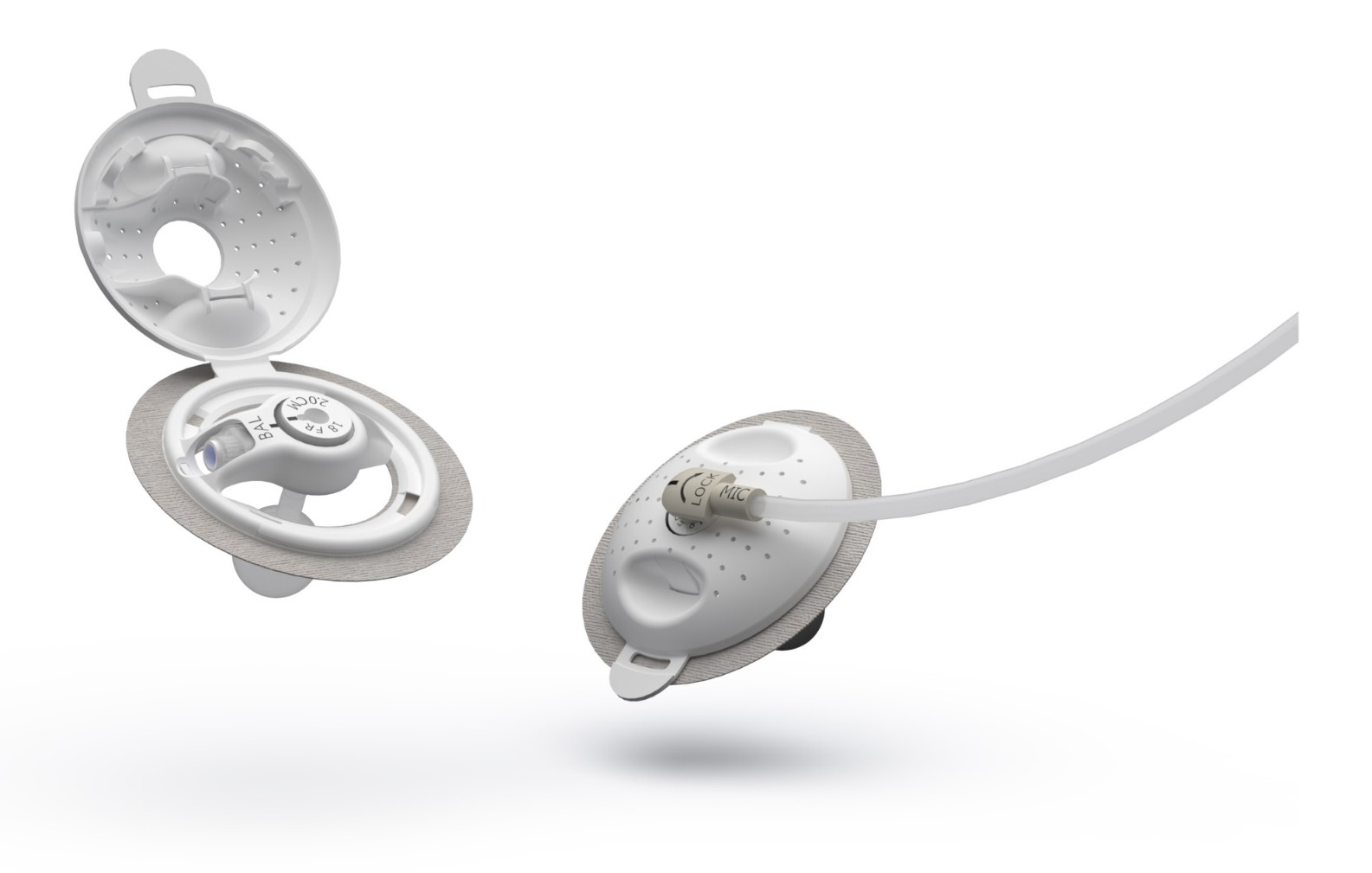
Medmiro’s first product, the G-Guard, is a purpose-built securement device for low-profile G-tubes. It combines a polypropylene core, which supplies structure, with TPU on the top and bottom for comfort against the skin, and it attaches with medical-grade tape rated for one to two weeks of wear. Three design choices stood out to me.
First, the G-Guard is meant to let caregivers follow recommended tube-care protocols without repeatedly removing the device or breaking its adhesive seal — the very cycle that makes tape so hard on skin. Second, the device opens, so a caregiver can clean the site, change gauze, and inspect the skin while it stays in place. Third, a patent-pending Child Safety Lock, similar in concept to a child-resistant medicine cap, makes it harder for a curious toddler to open the device by accident.
A second run at the problem: Tyler Mironuck’s path from Boulder to Pittsburgh
Tyler’s background is a big reason the design holds together. He began working on low-profile G-tube management as a graduate student at the University of Colorado Boulder, then co-founded a company to commercialize an early device and test it clinically at Children’s Hospital Colorado. Medmiro is his second attempt at the same problem, and it is built on what the first one taught him about what clinicians, families, and children actually need from the device.
A fast route to market: a 510(k)-exempt pathway and growing momentum
Medmiro is pursuing a 510(k)-exempt regulatory pathway — one that avoids the FDA’s 510(k) premarket notification process — with the aim of reaching the market in under 12 months. A new medical device more typically needs three to seven years. This fall, a lot has come together at once.
Texas Children’s Hospital, the largest children’s hospital in the country, is preparing to pilot the G-Guard and is a sub-awardee on Medmiro’s SBIR Phase I application, a federal small-business research grant. Medmiro was also one of just seven device companies chosen to pitch at Stanford Biodesign’s Impact1 CEO Summit, which gathers investors, clinicians, corporate strategics, foundations, and industry leaders focused on pediatric and maternal health innovation. With up to $100K in non-dilutive funding at stake, the Summit puts Medmiro in front of one of the most concentrated audiences in pediatric innovation.
On the manufacturing side, the company is collaborating with Penn State engineering faculty on manufacturing development and preparing a proposal through Pennsylvania’s Manufacturing PA Innovation Program. Medmiro is currently raising a pre-seed round to fund pilot studies and position the G-Guard for commercial launch.
What clinicians say about tube complications
Clinicians have been flagging the scale of this issue for some time. Thane Blinman, MD, MBA, at Children’s Hospital of Philadelphia, put it this way:
“It is not a hyperbole to suggest that tube complications may represent the single greatest hidden safety threat and cost-generator for patients in a children’s hospital.”
From G-Guard to U-Guard: a platform for tubes, lines, and catheters
The G-Guard is the beachhead. Medmiro’s longer-term platform, the U-Guard, targets the same securement problem across chest tubes, central lines, dialysis catheters, and surgical drains — a market the company estimates at more than $4 billion a year.
Why this feeding tube securement startup is worth watching
Tape and gauze have been the default for decades, but less because they perform well than because nothing better ever lasted. A device that keeps a tube anchored, lets a caregiver do the daily work of cleaning and checking the skin, and resists a toddler’s curiosity addresses a gap that families and hospitals have lived with for a long time. With a hospital pilot taking shape, a competitive pitch slot, and a short regulatory runway, Medmiro is one to follow as it moves from design to real-world use.