 Optimist Consulting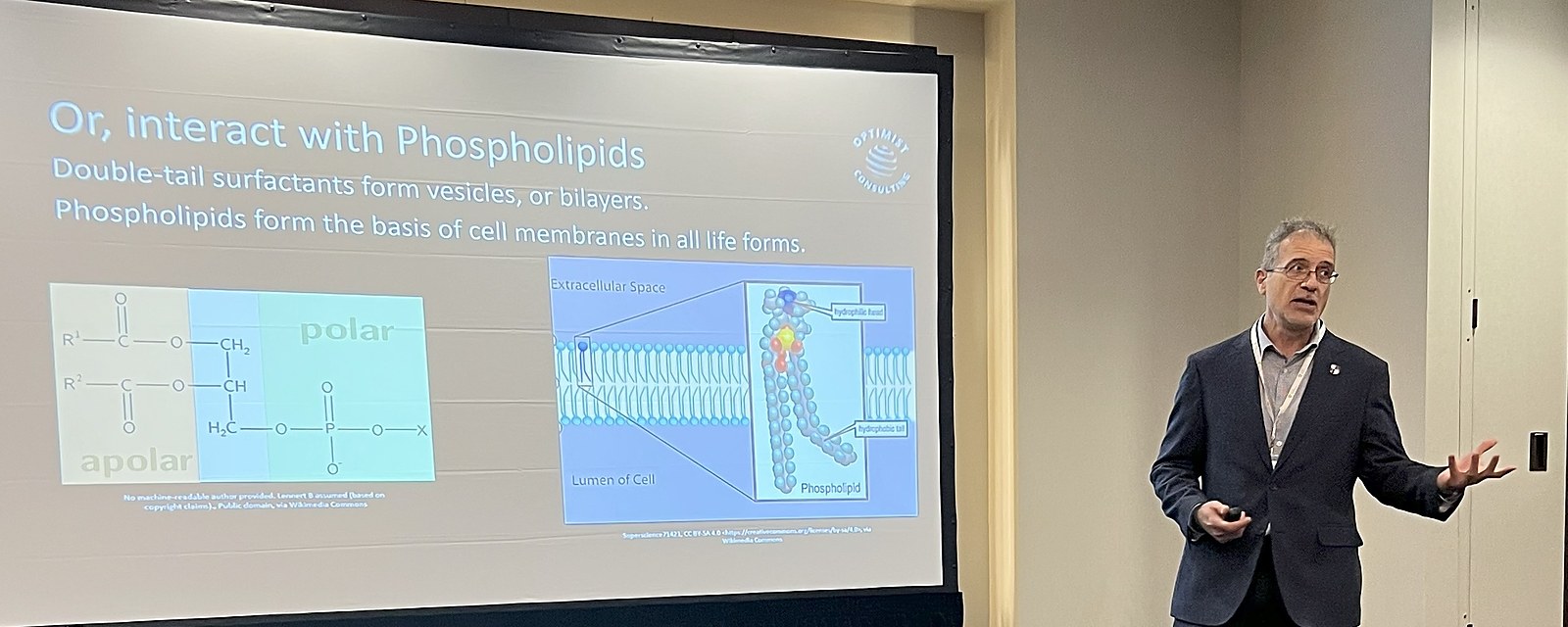
Plastic is the environmental villain everyone can photograph — the bottle, the bag, the wrapper washed up on a beach.
But what you can photograph is rarely the whole story, and with engineered plastics it usually isn't even the main one. These materials are quietly driving innovation across almost every industry, while public concern about them — some well-founded, some not — is driving legislation that could sharply limit their use. Innovation is outpacing perception. Closing that gap, honestly, is what I speak about.
The challenges, told straight
I don't dismiss the concerns. Some are real and deserve action; others are inflated well past what the evidence supports. Telling the two apart is the whole job.
Take microplastics. The particles are real and worth studying — but the claims that went viral haven't held up. The picture of plastic saturating every organ, and the figure of "a credit card of plastic a week," have been widely walked back once the underlying studies were examined: sampling picked up contamination, and naturally occurring materials in the body were wrongly analyzed as plastic. Set against the dust, soot, pollen, and combustion particles we breathe every day, plastic is a vanishingly small share of our actual exposure. Finding a particle is not the same as proving harm, and the science is still early. The real hazard is policy written from headlines instead of evidence.
Or take the family of fluorinated chemicals called PFAS. You've heard the alarming nickname; I won't use it, because it hides the single most important fact: PFAS isn't one substance. It's a label stretched over more than 10,000 different chemistries with dramatically different properties, bioavailability, and toxicity. Some are small, mobile molecules that caused real, documented water contamination and rightly led to lawsuits and phase-outs. Others are high-molecular-weight fluoropolymers that stay locked inside the product, don't leach, and behave nothing like those small molecules. Many PFAS can break down and biological organisms can clear some of them over time, at very different rates. Treating all ten thousand as a single villain is bad science, and it makes bad policy. The smarter path, already emerging, is to regulate by a material's actual properties and use, not by an acronym.
And the most visible concern — waste. Litter is real, it's ugly, and our systems for recovering plastics genuinely need to improve. But by weight and volume, plastics are less than 1% of the materials we consume — the other 99%, concrete, metals, wood, paper, glass, sits outside the debate entirely — and going "plastic-free" often means more weight, more energy, and more emissions, not less. The failure isn't the material; it's that we throw away something with real value still embedded in it. The work worth doing is building the systems that capture that value back.
The opportunities
Meanwhile — the part that's easy to miss when the conversation is all risk. Strong, light, tunable plastics are enabling things that weren't possible a decade ago:
- 01Autonomous vehicles & ADAS
Optically clear, radio-transparent, impact-tough polymers for LiDAR and sensor housings, plus the lightweighting that extends every mile.
- 02Electronics & EV thermal management
Thermally conductive plastics that move heat where metal used to, making devices and battery packs lighter, denser, and cooler.
- 03Healthcare
Sterile single-use devices, precise drug-delivery systems like auto-injectors and inhalers, and the reliable, lower-cost diagnostics that plastics make possible.
- 04Robotics & humanoids
Lightweight structural and compliant materials that let machines move safely alongside people.
- 05Drones & advanced air mobility
Composite airframes light enough to fly and tough enough to last — the material the whole category depends on.
What a talk or workshop covers
I separate the real risks worth acting on from the fashionable ones, give the microplastics and PFAS debates an honest, evidence-first treatment, and then turn to where these materials are actually taking us. It's built for industry and product teams, policymakers, sustainability leaders, and general audiences trying to make sense of the headlines.
Innovation is outpacing perception — and the fix isn't louder advocacy, it's better information. Give people the evidence and the proportion to tell a genuine risk from a viral one, and they make far better decisions, about the products they design and the policies they support. That's an optimistic message, and it happens to be the truth.